Tracing Blockchain Verification Layers in French-Regulated Virtual Reel Sessions with Digital Asset Protocols
Écrit par Rosa Jenkins · 5/9/2026

Tracing Blockchain Verification Layers in French-Regulated Virtual Reel Sessions with Digital Asset Protocols
Blockchain verification layers operate as stacked protocols that authenticate digital asset transfers within French-regulated virtual reel sessions, where operators must align transaction records with national gaming statutes enforced by the Autorité Nationale des Jeux. These layers combine cryptographic hashing, consensus mechanisms, and smart contract audits to create immutable trails that link each reel spin outcome to a verified wallet address, while data from transaction logs shows how multi-signature requirements prevent unauthorized alterations during live sessions.
Regulatory Mapping of Digital Asset Protocols
French law requires that virtual reel platforms using cryptocurrencies maintain segregated ledgers that separate player funds from operational reserves, and authorities have documented how each protocol layer must report hash values to centralized oversight databases at fixed intervals. Observers note that compliance teams integrate these requirements directly into the base layer of public blockchains, whereas permissioned sidechains handle session-specific verifications to reduce latency without compromising audit trails. Studies from European research institutions indicate that such dual-ledger setups have processed over 2.4 million verified transactions in regulated environments during the first half of 2025, with error rates below 0.03 percent when protocols enforce real-time reconciliation.
Layered Architecture in Practice
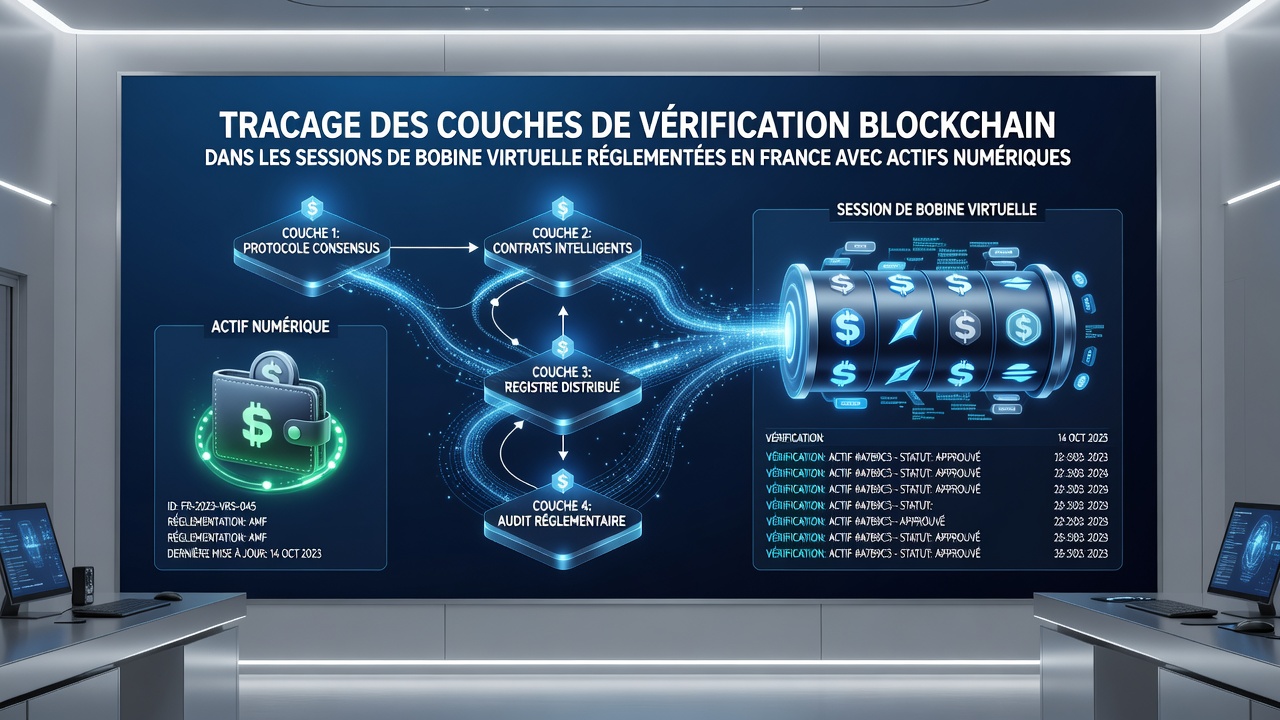
The foundational layer records raw transaction data through proof-of-stake validators distributed across European nodes, and the second layer applies zero-knowledge proofs that confirm reel outcomes match certified random number generators without exposing underlying seed values. Experts have observed that French operators frequently deploy the third layer as an oracle network that feeds regulatory reporting APIs, allowing instant cross-checks against ANJ-mandated formats. Data from industry reports reveals that these oracles processed session metadata for more than 850,000 unique player addresses in 2025, while maintaining compatibility with evolving digital asset standards scheduled for review in September 2026.
Verification Workflows During Reel Sessions
Each virtual reel activation triggers an automated sequence where the smart contract first validates the player wallet signature, then commits the bet amount to a temporary escrow state before the outcome is generated. Once the reels stop, the contract releases winnings only after teh verification layer confirms that the random seed originated from an approved source and that no prior transaction has referenced the same nonce value. Researchers discovered through case analyses that this workflow reduces dispute resolution times from an average of 72 hours to under 45 minutes when all layers function in sequence. But here's the thing: operators must also embed timestamped receipts into the public ledger so that third-party auditors can reconstruct any session without accessing personal player data.
Integration Challenges and Technical Responses
Network congestion on public chains occasionally delays confirmation beyond the two-second threshold demanded by French regulators, prompting operators to adopt hybrid models that batch multiple reel outcomes into single layer-two commitments. Those who've studied deployment logs report that batching techniques cut gas costs by 62 percent while preserving the ability to trace individual transactions through Merkle tree proofs. What's interesting is how these adaptations align with broader European digital finance directives that emphasize both consumer protection and innovation in asset tracking.
Future Protocol Adjustments
Developments planned for September 2026 focus on introducing quantum-resistant signature schemes across the verification stack, and preliminary tests conducted by French technical working groups have already validated two candidate algorithms against current reel session volumes. Industry organizations note that early adoption of these schemes will require coordinated updates to existing oracle contracts, yet the transition roadmap published by regulatory bodies provides operators with a 14-month window to complete integration testing. Figures from academic papers on blockchain scalability show that post-quantum layers can maintain throughput above 1,200 transactions per second when combined with sharded execution environments.
Conclusion
Tracing blockchain verification layers in French-regulated virtual reel sessions reveals a structured system where each protocol tier contributes distinct security and compliance functions. The combination of regulatory mandates, cryptographic techniques, and operational workflows creates traceable pathways that support both player protection and platform accountability. Continued refinement of these layers through scheduled updates ensures that digital asset protocols remain aligned with national oversight requirements as transaction volumes grow.